
Does dust TriboElectrification affect our ClimaTe?

The overarching goal of ERC D-TECT Project is to answer the question:
“Why dust particles travel longer than expected?”

Read More

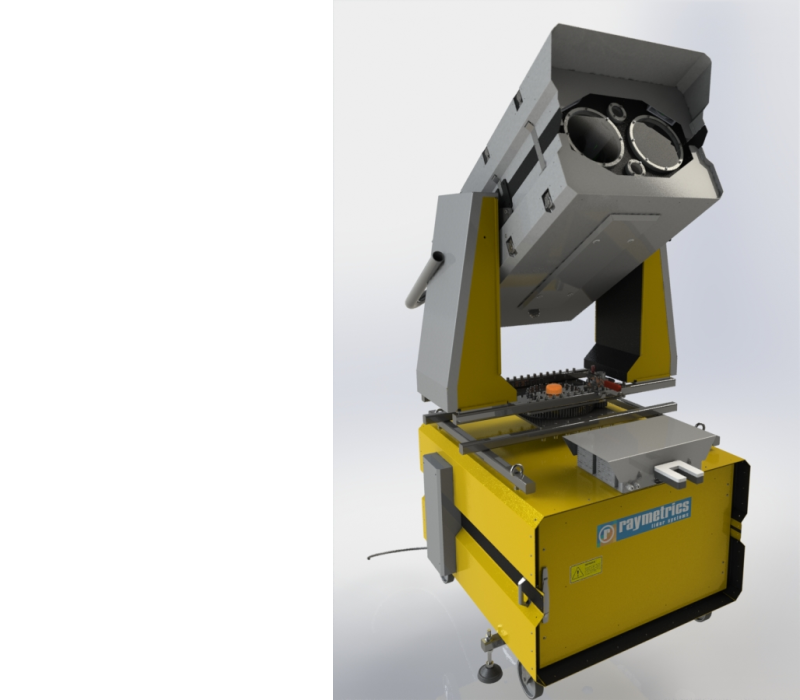
Lidar pollyXT

The sophisticated multi-wavelength lidar system Polly-XT, designed for unattended operation, is already deployed at the PANGEA observatory for over a year providing vertical profiles of the atmospheric constituents on a 24h basis.

Read More
Logo of IAASARS Logo of ACTRIS Logo of PANACEA Logo of ERC
WALL-E lidar concept

Scope

The overarching goal of the proposed project is to answer the question: “Why dust particles travel longer than expected?” by understanding the role of triboelectric charging and quantify its impact on the evolution of the dust properties during transport. The following objectives are specifically identified:

  • To empirically quantify the physical mechanism responsible for dust triboelectrification.
  • To assess the impact of the triboelectric charging on atmospheric dust transport, by acknowledging the effects of electric field and particle orientation on dust removal processes and related parameterizations.
  • To quantify the climatic impacts of the mechanism, particularly the effect on the dust size evolution during transport and consequently on dry deposition and CCN/IN reservoirs, as well as the effect of the electric field on particle orientation and consequently on radiative transfer (“Venetian blind effect”).
Work Packages

Work Packages

Equipment / Infrastructure

The PANhellenic GEophysical observatory of Antikythera – PANGEA (35.86 N, 23.29 E, 110m a.s.l.) is a natural laboratory that facilitates the scientific needs of the ERC Consolidator Grant D-TECT.

The following equipment has been installed and is operational at the station

Our Team

Get In Touch

Email react@noa.gr
Phone +30 210 81 09 182
Address I. Metaxa & Vas. Pavlou, Penteli, Greece